School Project | Spring, 2024 | Role: UX Researcher and Designer in a team of 4
Table of Contents
Outcomes
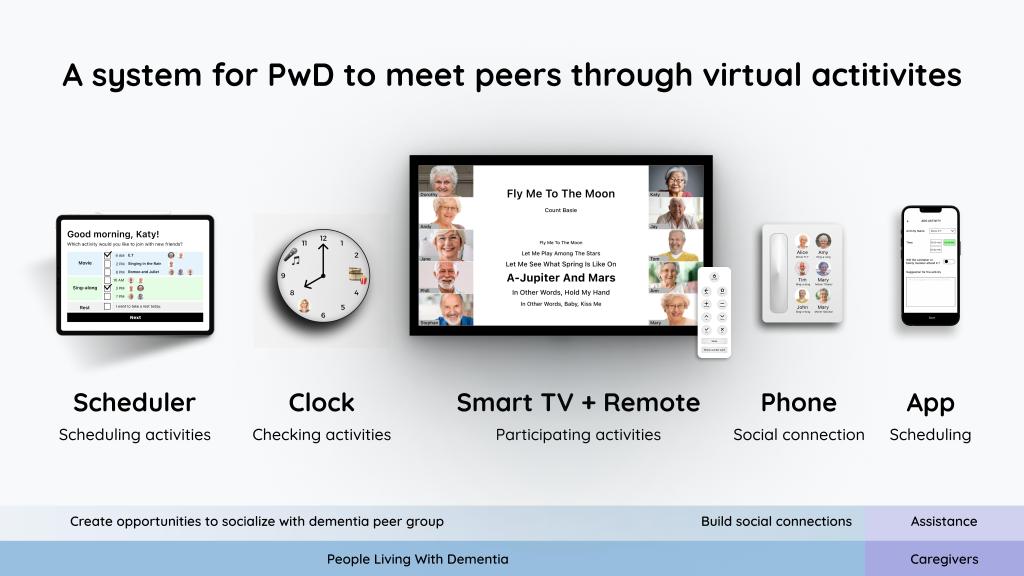
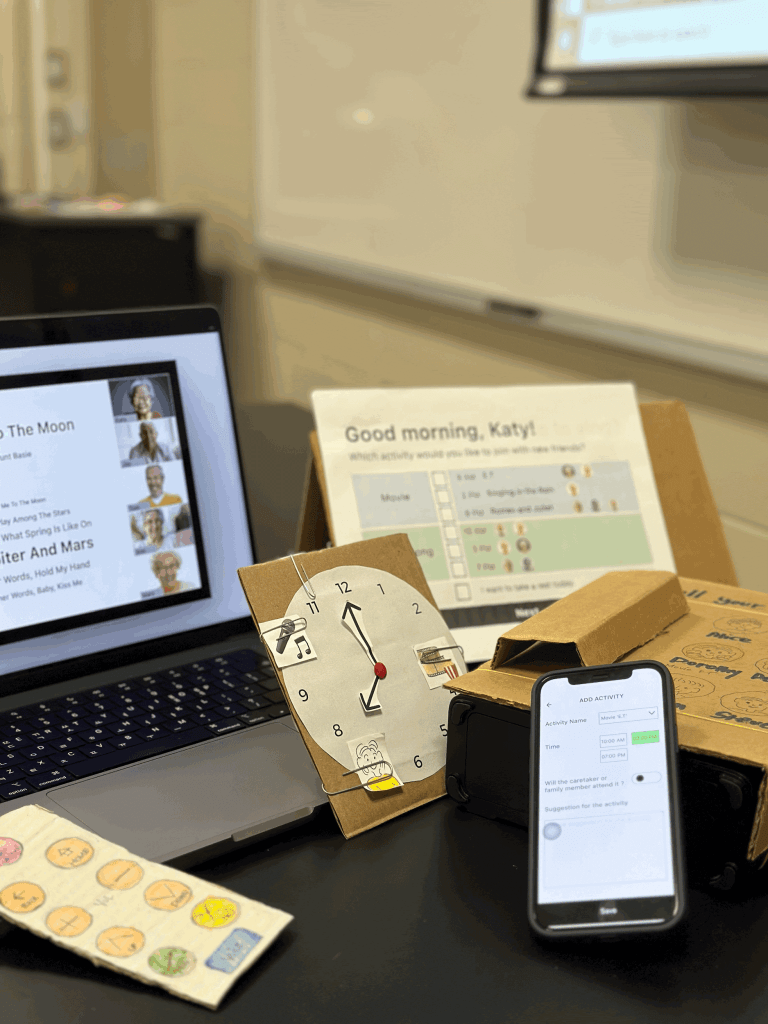
This project resulted in a paper prototype for a multi-channel, multi-device system that allowed individuals with dementia to participate in virtual activities with their peers. This system consisted of a scheduler, clock, smart TV, remote, phone, and mobile app.
The Challenge
The challenge for this project was to improve the daily life of people living with early-stage dementia by giving them social support through peer groups.
While the cognitive decline of people with dementia (PwD) is widely known and recognized, their social needs can often go unaddressed. People with dementia are full of personality and want to socialize. This is especially true of people with early-stage dementia, who still maintain most of their intellectual capabilities. However, they can often feel lonely when they’re not around people who empathize with them. When they’re given the opportunity to interact with others like them, people with dementia feel safe and don’t feel as embarrassed when they make mistakes. By forming a sense of community, people with dementia feel like they have purpose, especially when doing activities with each other.
The Team
My team consisted of of three other first year students in Indiana University’s HCI/d Master’s program. These included Priya Jain, Mansi Kadam, and Saeoul Park.
For this project, I served a dual role as UX designer and researcher.
The Process
Co-design Workshop
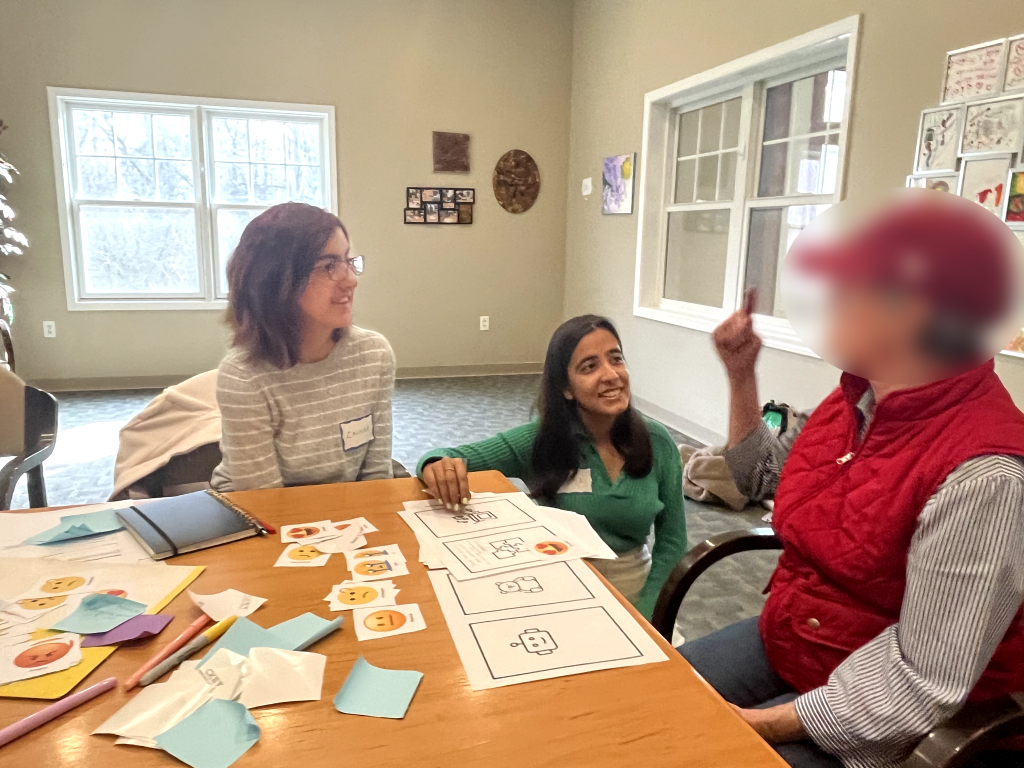
The main research activity for this project was a co-design workshop that consisted of two activities.
In our first activity, participants were asked to create a fictional persona. By using fictional personas instead of asking our participants to describe themselves and their experiences, we created distance between our participants and the person they were describing to ensure their comfort.
Using personas, we hoped to learn more about our participants, what they enjoyed, and what difficulties they faced on a daily basis.
For our workshop’s second activity, participants were shown pictures of six items, and were then asked to describe what they liked about those specific items, and any thoughts that came up in relation to those items.
Through this second activity, we learned about what kind of interactions our participants enjoyed. In doing so, we were able get a sense of what interactions mattered most to our participants so that we could create products for them that they could truly enjoy.
Co-design Outcomes
The outcome of our co-design workshop revolved round three themes:
- Social connections: Allowing individuals with dementia to to be more engaged with their community.
- Emotional support: Being mindful of people’s emotional needs.
- Individual interests: Allowing individuals to participate in activities they genuinely enjoy.
We believed that being aware of these themes would help ensure the happiness of our users.
Ideation
Key Takeaways for Users’ Needs
- The importance of autonomy: instead of taking over responsibilities , our design should encourage individual autonomy whenever possible.
- Companionship: Facilitating healthy social connections between people with dementia, caregivers, and the wider community will improve PwD quality of life.
- Pursuing happiness: PwD experience increased engagement and enjoyment when they focus on their full potential as individuals with hobbies, interests, and ambitions. They enjoy reminiscing about past family relationships, their careers, and fond memories. They enjoy talking about what they loved doing in the past, and look forward to pursuing interests that give them purpose.
Iteration of a PwD-Friendly TV System
The process of prototype creation was one of simplifying the complex and incorporating the modem with the familiar to provide user comfort, and to ensure that our interface was easy to use.
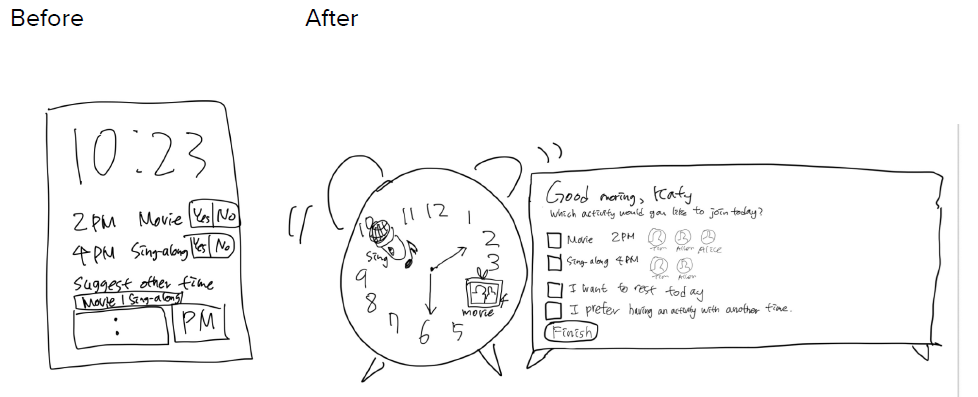
For example, in our original design, one of our teammates designed a digital clock with a built in schedule. However, this design was changed to a more traditional clock when we realized that users would be more familiar with a traditional, analog clock. The scheduled activities on the user’s schedule were changed so that they would appear as symbols on the clock itself, to make it more intuitive.
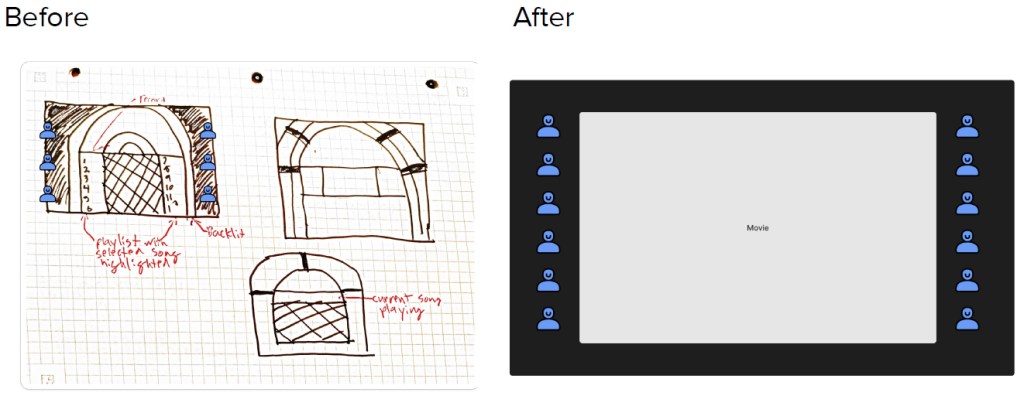
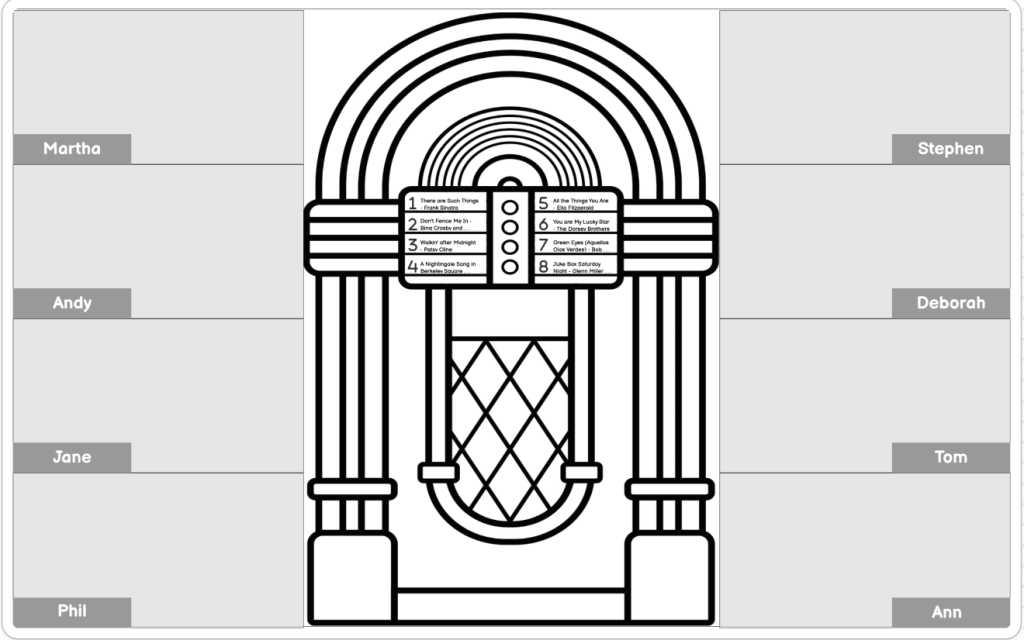
On the other hand, my design for a virtual jukebox screen originally involved a much more traditional jukebox design. However this eventually changed to a more modern video-conference style setup, when we decided to fold this idea into our Smart TV design. This was due to a few factors.
- This design proved too be visually complex and difficult to read.
- Further incorporation of the jukebox with the Smart TV setup would be more engaging for users.
- TVs are stationary, and users would be accustomed and familiar with them.
To encourage further social engagement, and to reduce the number of channels. we came up with a system where users could save the phone numbs of friends they met through their activities by storing them in the scheduler. However, this would involve the use of a an additional channel, which would create additional difficulties for people with dementia with cognitive difficulties.
Thus, we opted to create a corded phone design based on existing phone designs marketed for PwD. This phone would automatically save phone numbers to the corded phone should two users mutually agree to share contact information. It should also be noted that this phone design takes inspiration from devices for PwD that are already on the market, in that it resembles a corded phone and displays individual contacts with a name as well as a photo, for easier recognition.
Example Iterations after User Testing
After finalizing our design, we created a series of cardboard prototypes and used those prototypes for user testing with two of our peers.
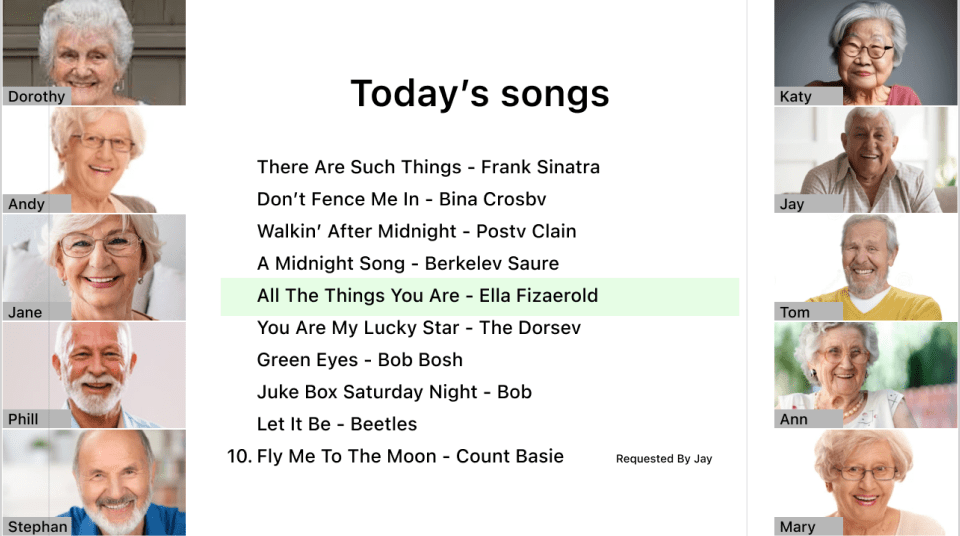
Regarding our smart TV setup, users mentioned that it was difficult to see jukebox song titles when they were sitting on the couch. It was also difficult to see if users had gotten the songs they requested.
To address these issues, the sing-a-long screen was simplified to only display song titles and lyrics. Additionally, the song chosen by the user would be highlighted on the screen.
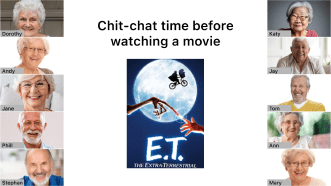
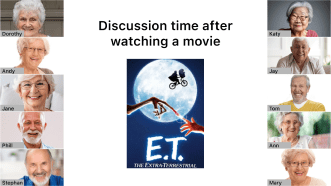
To encourage interaction and bonding outside activities, a dedicated discussion time was added before and after each activity.
Limitations
- No way to moderate behavior: While the current system is designed to allow caregivers to partake in activities with their family members with dementia, the current system is designed so that users attend activities by themselves. Given that people with dementia can be more emotionally volatile, the question of what to do when users exhibit disruptive or harmful behaviors would need to be addressed.
- Hesitancy of use and lack of knowledge: Given that this system would primarily be marketed towards caregivers, it’s possible they would be hesitant to implement such a system, not know that it exists, or not understand why such a system could be beneficial to their family members with dementia. Thus, it would be important to educate caregivers about this system.
- Lack of safety features: Currently, the system does not have ways of vetting individuals with access to the system, or of protecting users against the accidental divulging of information. Because of this, it would be necessary to find ways of ensuring user safety.
Skills Learned
In addition to learning about the difficulties of people living with dementia, I learned the benefits of meeting with participants prior to conducting UX research activities such as co-design. This is especially true for stigmatized populations, such as the individuals we worked with for this project. That is to say that meeting with our participants before our co-design activity allowed us to understand them as individuals outside the context of our research, and informed our design process by giving us a better idea of who our participants were on an individual level.
 Zainab Hassani