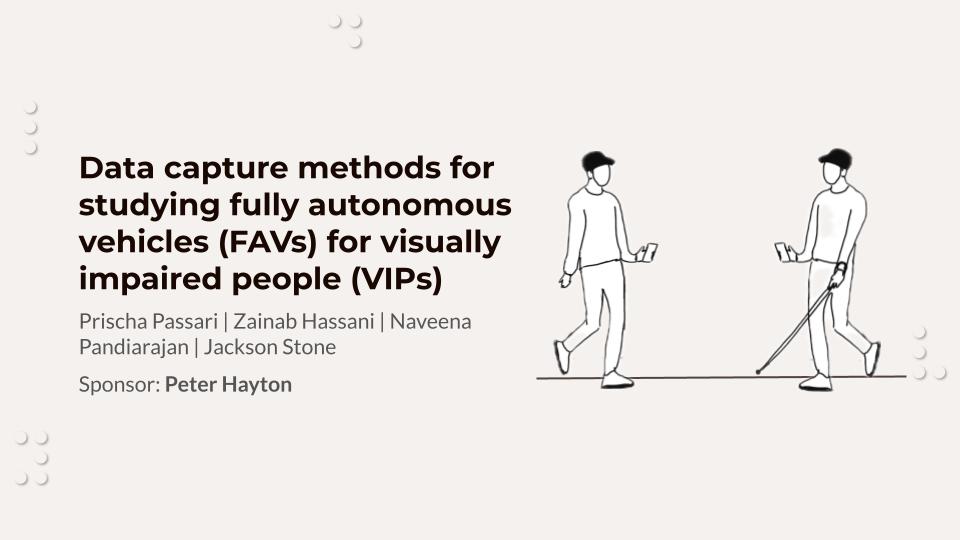
School Project | Summer, 2024 | Role: UX Researcher and Designer in a team of 4
Table of Contents
Outcome
The outcome of our project was twofold. First, we crafted different ways of measuring the VIP travel experience. Next, we developed guidelines for crafting an accessible travel experience for VIPs as it pertains to future FAV use.
Project Goal
The overall goal of our project was to identify data capture methods for quantifying the visually impaired travel experience.
Given the limitations of visually impaired people (VIPs), fully autonomous vehicles (FAVs) could benefit VIPs by giving them an alternate mode of travel. However, to make FAVs more accessible for VIPs, it’s necessarily to first understand travel in the context of the visually impaired. In doing so, we can create a more accessible and seamless travel experience.
Overview
In May 2024, I had the opportunity to participate in Northumbria University’s Digital Civics Exchange, a two week program hosted in Newcastle, England, where students from multiple international universities worked on locally sponsored projects to engage with and enrich the local community.
For this project, my team and I assisted doctoral candidate Peter Hayton of Northumbria University by creating ways to quantitatively measure the difficulties faced by visually impaired people (VIPs) in regards to travel. In doing so, we hoped to aid Mr. Hayton in his goal of researching transportation accessibility as it pertains to fully autonomous vehicles (FAVs).
The Team
Along with Peter Hayton. our team consisted of four students split between Indiana University Bloomington, and Purdue University West Lafayette. These included:
- Naveena Pandiarajan, M.S., Indiana University
- Prischa Passari, B.S., Purdue University
- Jackson Stone, B.S., Purdue University
I was a UX researcher for this project, but also did performed design activities as well.
About Autonomous Vehicles
We can think of autonomous vehicles as consisting of six levels, with level 0 being a non-autonomous vehicle, and level five being a fully autonomous vehicles, In this context, levels 1 and 2 represent instances where the driver maintains the majority of control, while 3 and 4 represent instances where the driver maintains minimal or conditional control of the vehicle.
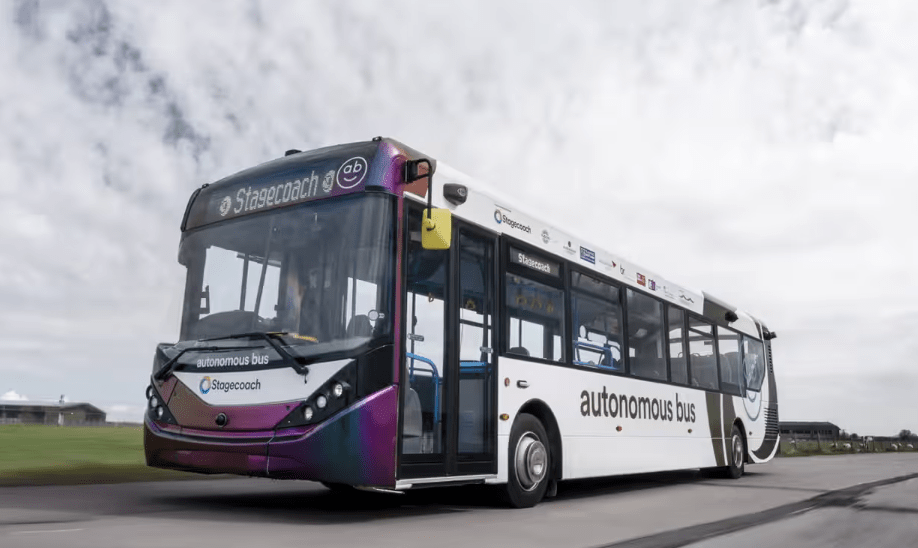
In May 2023, Edinburgh began to operate the UK’s first autonomous bus service. Run by CAVForth, this autonomous bus operates within a 14 mile (~22.5 km) area.
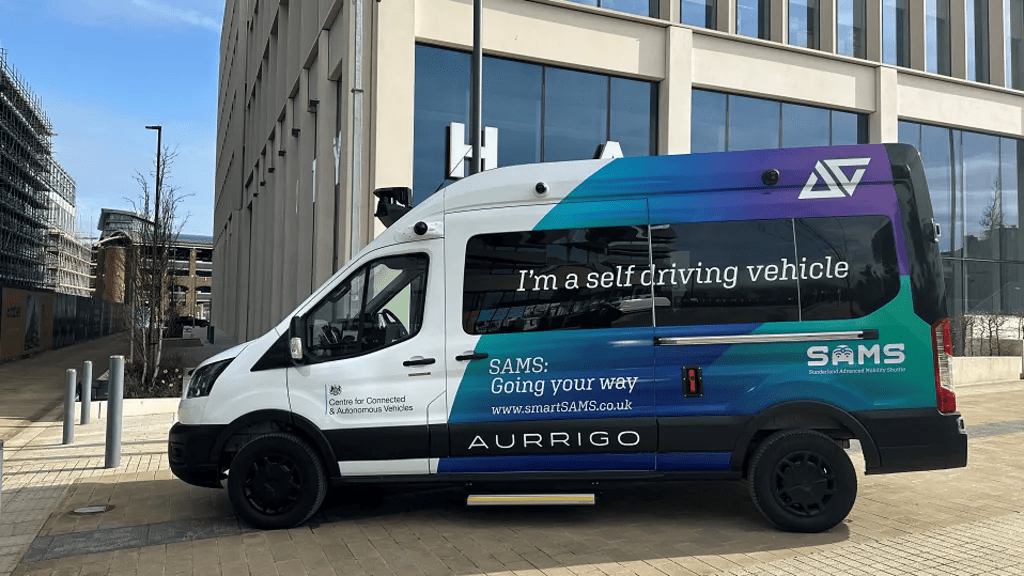
Likewise, Newcastle is slated to introduce its first autonomous shuttle service, the Sunderland Advanced Mobility Shuttle (SAM), in late 2024.
Gathering Insights
Initial Research
To better understand problems faced by the visually impaired, we conducted an informal interview with Pater Hayden, who is legally blind. Doing so allowed us to understand the current state of FAVs, gave us insight into the current transportation landscape, as well as some of the difficulties faced by VIPs.
Transportation Accessibility in Newcastle
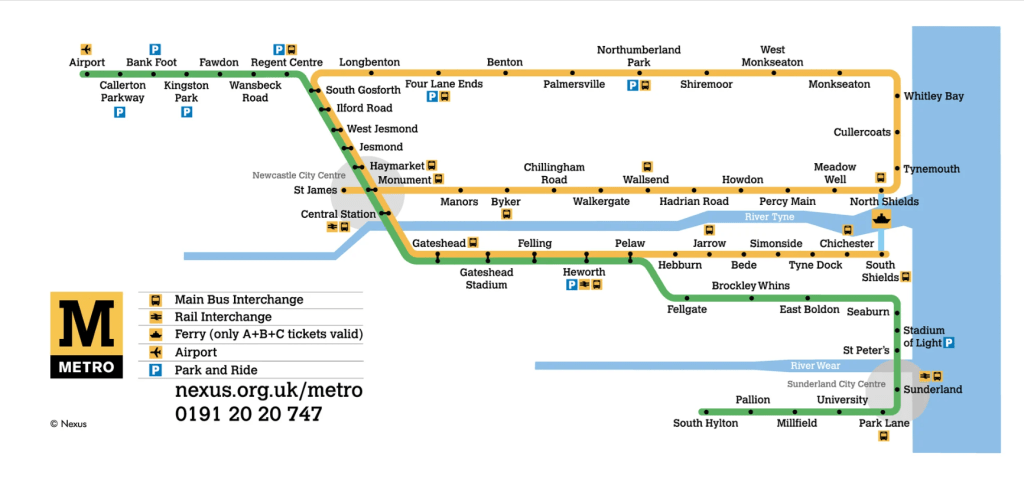
In conduiting our research, we found that Newcastle’s transportation system has numerous features that improved accessibility for the visually impaired. These include:
- A well-connected transit system within Newcastle, and its vicinity.
- Additional benefits and assistance provided to VIPs to make travel easier and allowed for VIP independence.
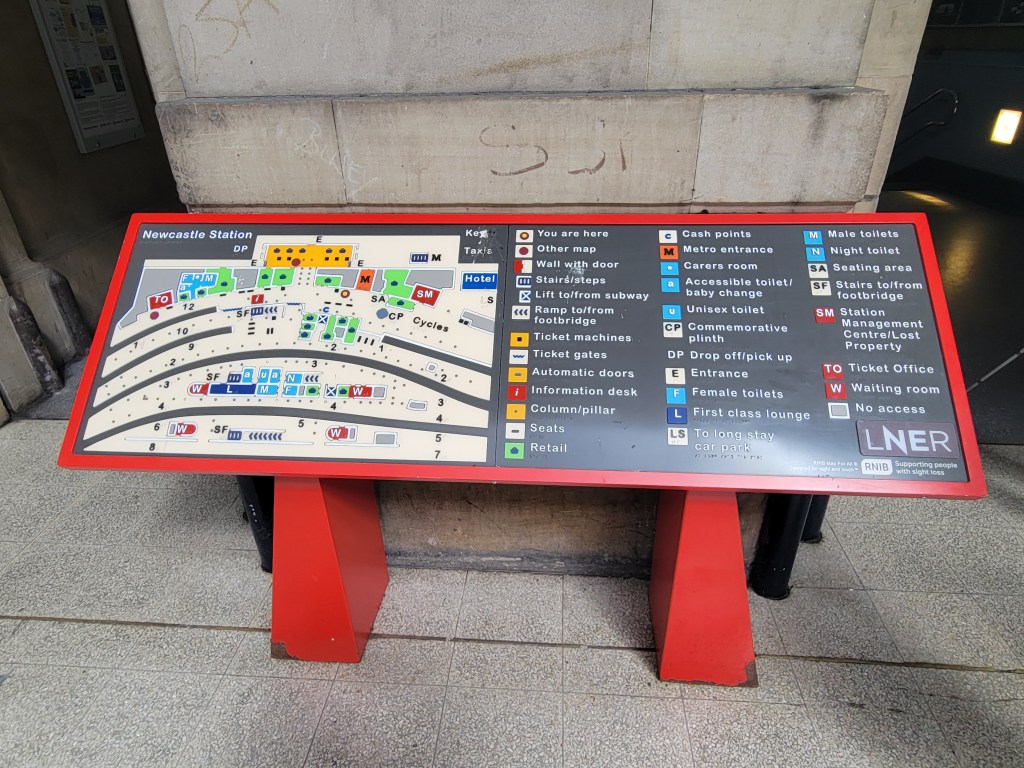
Despite these benefits, there are still some pitfalls that would make it difficult for VIPs to navigate the public transportation system with ease:
- There are multiple bus and rail lines operating in and around Newcastle, each offering a different service.
- Having to use multiple applications just to complete a single travel journey creates frustration.
- Buses aren’t always available, limiting travel.
Contextual Inquiry
We next conducted a contextual inquiry with Mr. Hayden to better assess the difficulties faced by VIPs.
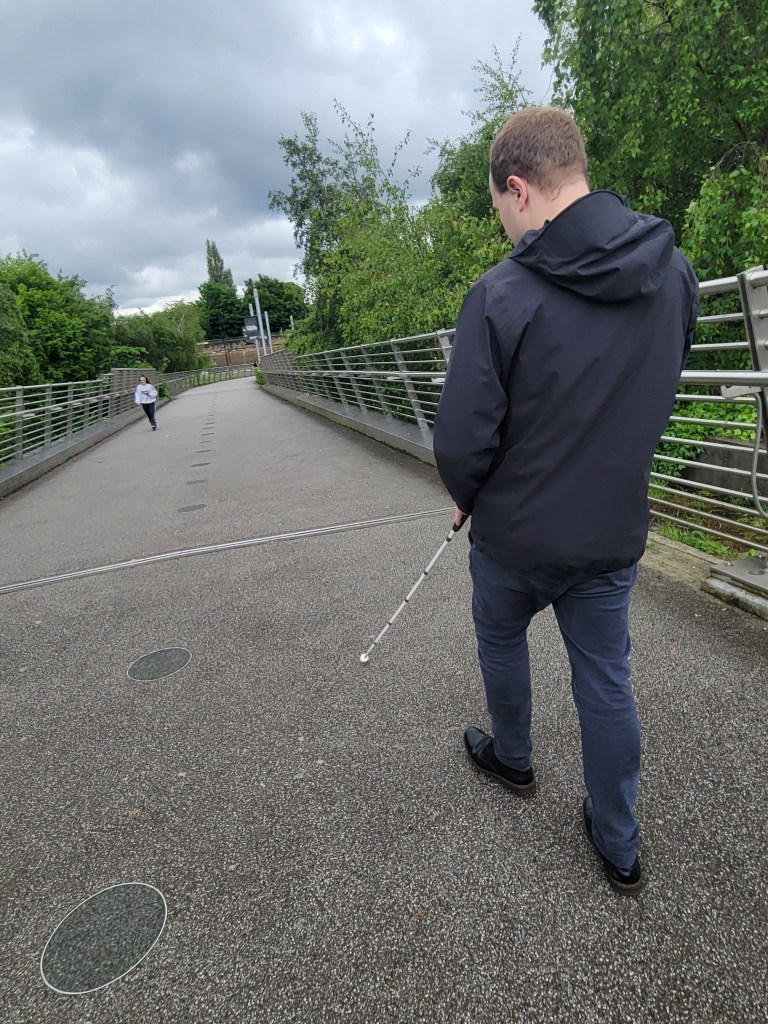
By mapping out the typical VIP journey, we were able to learn what kinds of obstacles exist for VIPs. This would subsequently allow us to think of ways to measure not only those pain points, but parts of the travel journey where travelers were satisfied as well.
Three Key Factors for Improving Travel Accessibility for VIPs
Our research led us to believe that that there are three key factors that would improve accessibility for VIP travelers:
- A simplified, and cohesive travel experience.
- Improved consistency between between transportation providers.
- Reduced cognitive load.
Brainstorming Data Capture Methods
One issue we found with current methods for quantifying the VIP experience (especially in regards to those who require the use of a cane) was that some current research methods could potentially make navigation uncomfortable for users. For example, some studies placed a camera either on the cane, or strapped it onto the person’s chest. This would both be unwieldly, not feel natural, and would be uncomfortable for users.
Thus, we created a cane concept modified with various means of measuring the VIP experience.
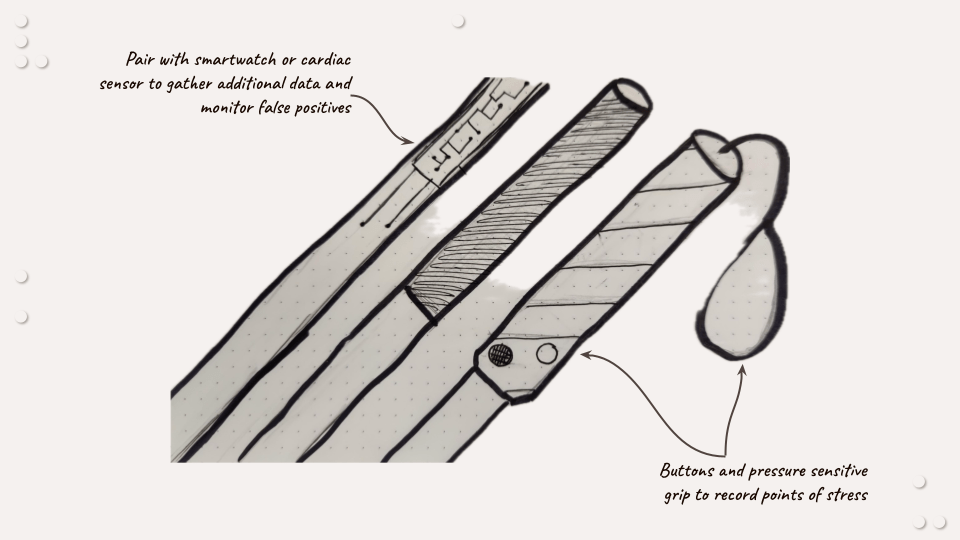
We added two buttons on the exterior of the cane’s grip. This would allow users to pinpoint moments of stress and ease in their travel journey. Likewise, a pressure sensitive grip would allow researchers to note potential instances of stress as the person is walking.
Modifying the cane handle so that it could be paired with a smartwatch would allow researchers to gather data such as the user’s location and heartrate. This would allow researchers to check for false positives, and to assess additional data that could support their data.
Conclusion
The introduction of FAVs means the creation of a new travel alterative for visually impaired individuals who rely on public transportation. However, the introduction of a new mode of transportation necessitates the study of the VIP travel experience to ensure an accessible stress-free travel environment.
Skills Learned
This project showed me the interplay of academic and applied human-computer interaction. Specifically, it showed me how designers in the industry can help designers and researchers that work within academia.
Additionally, this project gave me the opportunity to practice my interviewing skills. Specifically, I learned to reflect on interview questions in the field. By being aware of my surroundings, I learned how environmental awareness can help generate follow-up questions during contextual inquiry.
 Zainab Hassani